Bus Arrival
SixcubeRacing
4.4697.00 Reviews
- Version
- 4.1.1
- Installs
- 100.00M
- Age Rating
- Everyone
Screenshots
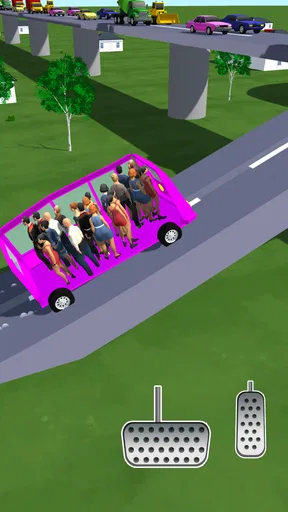
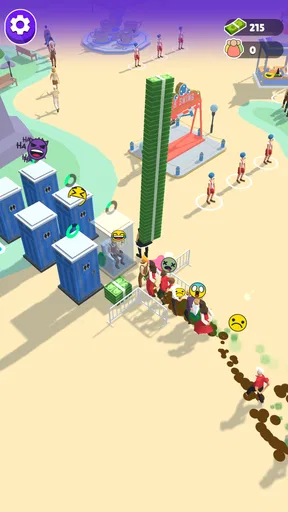
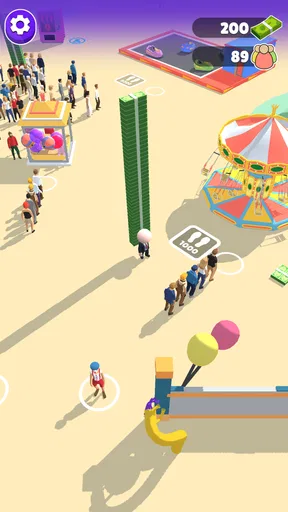
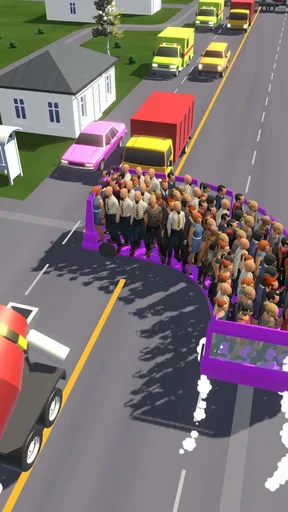
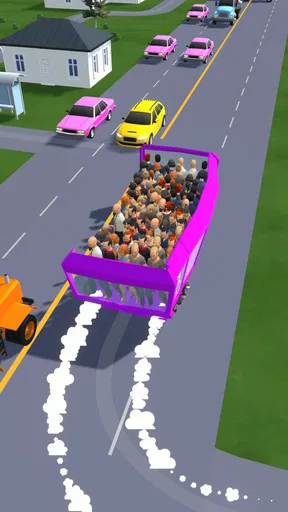

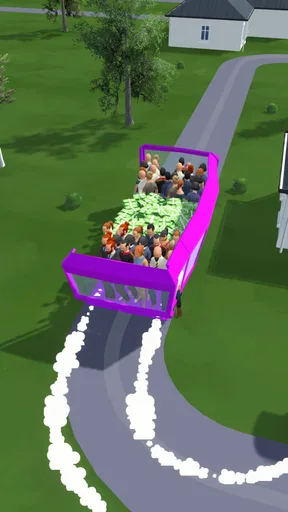
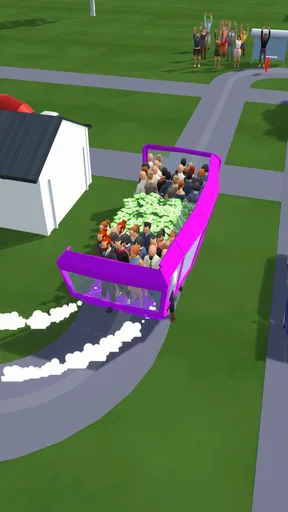
Our Review of Bus Arrival
 Analysis by Appyee
I approached Bus Arrival expecting a small, easygoing racing game, and that is exactly where it works best. Developed by Sixcube, this free game turns the simple idea of getting a bus to its passengers into a series of quick driving challenges. It is not trying to replace a deep driving simulator or a serious competitive racer. Instead, it focuses on immediate movement, short sessions, and the satisfying feeling of watching a route come together.
My overall impression is positive, with one important condition: you need to enjoy repetition and simple objectives. The game is at its best when I want something I can pick up for a few minutes without learning a complicated control system. It is less convincing for anyone looking for realistic traffic, detailed vehicle handling, or the long-term depth of a full racing game. That distinction matters more than its label, because this is really a casual bus-driving experience with racing elements rather than a traditional track racer.
How the bus-driving idea turns into a casual racer
The central appeal is easy to understand. I drive a bus, collect passengers, and work toward completing the route. The store summary, “Bus Arrival! All aboard!”, captures the basic mood, but the actual attraction is the rhythm created by moving through each stage: accelerate, steer, avoid trouble, and arrive with the journey intact. That uncomplicated loop makes the game approachable from the first attempt.
What surprised me is how much the bus changes the feel of a normal racing game. A sports car game usually rewards aggressive cornering and constant speed. Here, I have to think about the vehicle as something carrying people. Even when the action is light, the objective gives each movement a little more purpose. I am not simply chasing a finish line; I am trying to make progress through a route without losing control of the situation.
The controls are designed for quick understanding rather than simulation. That is a strength for casual players, younger users, and anyone playing on a phone while waiting for an appointment. I did not need a long tutorial session before I could make useful progress. The trade-off is that experienced racing fans may find the driving too forgiving or too limited. There is not the same sense of weight, tuning, or precision that makes a dedicated racing title compelling.
One useful way to play is to treat each attempt as a short planning exercise instead of holding the accelerator and reacting at the last moment. I found it more reliable to look at the road ahead, decide where I wanted the bus positioned, and then make smaller steering corrections. This matters because a large vehicle feels less nimble than the cars found in many mobile racers. The game becomes more enjoyable when I work with that limitation rather than fighting it.
The passenger objective also gives the game a recognizable identity. Plenty of mobile racing games use speed as their only language, but this one adds a service task to the movement. That makes it a better fit for players who like the idea of a route or delivery challenge but do not want the management complexity of a full transport simulation. It sits in a comfortable middle ground: more purposeful than an endless driving toy, but much lighter than a detailed bus simulator.
Why short sessions suit the design
I can imagine using this game during a short break, on public transport, or at the end of the day when I want something active but not mentally demanding. The concept is readable almost immediately, so there is little friction between opening the game and starting a run. That is especially useful on a phone, where a game that requires a long commitment can feel inconvenient.
The short-session design also makes experimentation less intimidating. If I make a poor turn or mishandle a section, I can try again without feeling that I have wasted a large amount of time. That retry-friendly quality is one of the strongest reasons to recommend it to casual players. It encourages small improvements: a cleaner line, a better approach, or a more careful response to an obstacle.
At the same time, the same simplicity can become noticeable during longer play. The core activity remains centered on driving the bus through its route, so players who need constant novelty may eventually feel that the structure is familiar. I would not choose it as my only racing game. I would keep it alongside more varied titles, using it when I want a direct and uncomplicated challenge.
The practical strengths I noticed while playing
The first strength is clarity. The game’s premise is understandable without a large amount of explanation, and that makes it friendly to people who are not regular racing players. Someone can see the bus, understand that passengers and arrival matter, and begin making decisions right away. That kind of accessibility is more valuable than it sounds, particularly for family members who might be put off by complex menus or realistic driving controls.
The second strength is the unusual balance between movement and responsibility. The bus is not just a visual theme placed on top of a standard racer. It changes how I think about the road. I naturally became more cautious with positioning and timing because the objective felt connected to the vehicle’s role. That extra layer is simple, but it gives the game a stronger personality than a generic car-running title.
The third strength is that it works well as a low-pressure introduction to mobile racing. A player who finds conventional racers too fast or too competitive can use this as a gentler starting point. It still offers the satisfaction of steering, avoiding problems, and reaching a destination, but it does not demand the same immediate precision as a game built around lap times.
There is also a useful mental reset in the game’s scale. I do not have to remember a complicated upgrade plan or study a large map before playing. I can focus on the current route and make a few practical decisions. For me, that makes it suitable for brief, repeatable sessions rather than a single long campaign.
Where the experience starts to feel limited
The biggest weakness is the narrowness of the central loop. Once I understand how to steer and approach the route, the challenge depends heavily on how much I enjoy repeating that pattern. The bus theme gives the game character, but it cannot by itself provide the variety that a larger racing package might offer. Players who expect a broad collection of vehicles, deep customization, or a serious competitive structure should adjust their expectations before downloading it.
The casual handling is another limitation. It makes the game approachable, but it reduces the satisfaction available to players who enjoy mastering exact braking points or realistic vehicle behavior. If your favorite part of racing games is fine control at high speed, this may feel too soft. A dedicated racing game with more demanding physics would be a better choice for that audience.
I also think the free-to-play format deserves a careful look from anyone who dislikes optional spending. The game itself is free, while in-app purchases range from $0.49 to $99.99 per item. That does not automatically make the experience poor, but it means I would approach purchases deliberately rather than tapping through them casually. My advice is simple: play the opening sessions first, decide whether the basic loop is genuinely enjoyable, and only then consider spending anything.
That price range also changes who I would recommend the game to. For a player who wants a free casual title and is comfortable ignoring purchases, it is easy to try. For someone who prefers a fixed-price experience with no temptation to buy extras, a paid racing game may feel more comfortable. The right choice depends less on the bus concept and more on how you prefer mobile games to handle optional spending.
Another point is age suitability. The game carries an Everyone content rating, which fits its straightforward, non-serious presentation. I would still suggest that parents make their own decision about purchases on a shared device, especially because the available items cover a wide range. The gameplay itself is approachable, but the purchasing environment is worth treating separately from the content rating.
Small techniques that make the routes easier
My first practical tip is to avoid overcorrecting. When the bus begins drifting toward an unwanted position, a quick series of large movements can create a second problem before the first one is solved. I had better results with brief adjustments and a moment of observation between them. This is a small change, but it makes the bus feel more predictable and reduces unnecessary collisions or missed approaches.
My second tip is to think about the next section before finishing the current one. It is tempting to focus only on the immediate obstacle, but the bus needs space to settle into a useful line afterward. I tried to finish one maneuver in a position that gave me room for the next movement, rather than treating every turn as an isolated event. That habit is particularly helpful when the road becomes more demanding.
My third tip is to use the game as a practice tool for controlled movement rather than chasing speed every time. Fast progress can feel rewarding, but rushing may make the route less stable. When I slowed down enough to understand how the bus reacted, later attempts became more consistent. This approach is useful for younger players too, because it turns failure into a clear lesson instead of a random setback.
A fourth useful approach is to separate learning attempts from reward-focused attempts. On the first run through an unfamiliar section, I concentrated on recognizing the route and identifying where my steering became uncertain. On the next attempt, I tried to improve one specific part instead of expecting a perfect result everywhere. That makes the game feel less repetitive because each retry has a defined purpose.
Who will get the most from it
I would recommend Bus Arrival to players who like casual racing, simple driving challenges, and games that can be played in short bursts. It is also a good fit for someone who enjoys transport themes but does not want timetables, vehicle maintenance, route management, or a detailed simulation layer. The bus gives the game a distinct hook while keeping the controls approachable.
It may also suit families looking for an accessible game with an Everyone rating. The basic goal is easy to explain, and the action does not depend on advanced racing knowledge. A parent could hand it to a child who likes vehicles and then decide separately how to handle optional purchases. The game’s simplicity is an advantage here, provided expectations stay realistic.
I would be more cautious about recommending it to competitive racers. If your ideal mobile game involves online competition, deep car setup, realistic physics, or a large range of race formats, you will probably outgrow this one. A conventional racing title would offer more technical depth, while a full bus simulator would better serve someone interested in authentic driving routines and transport operations.
It is also not the best choice for players who dislike repeated attempts. The design is built around learning through practice, and that means some sections may feel less satisfying if you want constant forward movement. I enjoyed retrying a route when I knew what I was trying to improve, but I can understand why another player might see the same structure as repetitive.
Device details and what the audience size suggests
The game supports Android devices running version 7.0 or later, and the current version is 4.1.1. That makes it accessible to many older devices, although the experience can still vary depending on the phone’s overall performance and screen responsiveness. For the smoothest control, I would close demanding background apps before playing, particularly if the device is older or heavily used.
Its scale is also worth noting. The game has passed 100 million installs, carries an average rating of 4.4 from around 340 thousand ratings, and is listed with 697 reviews. Those figures do not guarantee that every player will enjoy the same loop, but they do show that the concept has reached a very large casual audience. I see that as evidence of broad accessibility rather than proof that it offers the depth of a specialist racer.
Sixcube has positioned the game for easy entry: it is free to install, available to an Everyone audience, and built around a premise that can be understood quickly. That combination explains its reach. It also explains why a dedicated racing fan might find it less demanding than expected. The game is designed to remove barriers, and removing barriers sometimes means reducing complexity.
My verdict after weighing the strengths and trade-offs
Bus Arrival succeeds because it gives a familiar mobile activity a clear identity. Driving a bus, handling routes, and getting passengers where they need to go feels more purposeful than simply steering a car around a track. I liked that I could start playing quickly, improve through small adjustments, and stop after a short session without losing the thread of a large campaign.
Its limitations are equally clear. The driving is casual rather than realistic, the central loop can become repetitive, and the optional purchase range means careful players should avoid impulse spending. None of those points ruins the game, but they define the experience. I would not install it expecting a full simulator or a technically demanding racer.
My recommendation is straightforward: choose it if you want an approachable bus-themed racing game for quick, repeatable sessions. Skip it if you need deep vehicle customization, competitive racing, or a fixed-price experience with no in-app purchase structure. For the right player, its direct controls and route-focused objectives make it an enjoyable time-filler. For everyone else, a more specialized racing or simulation game will probably offer a better long-term match.
After playing it, I see the game as a friendly casual option rather than a definitive racing experience. That is not a criticism of its ambition; it is the key to using it well. Open it when you want a simple challenge, take the bus through its route, learn from the awkward turns, and enjoy the small satisfaction of arriving successfully. In that role, it does its job well.
Verdict
Strengths of Bus Arrival
- Shows estimated bus arrival times at nearby stops.
- Helps plan trips without checking a physical timetable.
- Uses location services to find stops around you.
- Useful for comparing upcoming buses on the same route.
- Simple interface makes frequent checks quick and convenient.
Limitations of Bus Arrival
- Arrival estimates may be inaccurate during traffic or service disruptions.
- Coverage can vary depending on the city and available transit data.
- Requires an internet connection for current arrival information.
- Location access may affect battery life during extended use.
- Some features may be limited or unavailable outside supported areas.
Other Releases by Sixcube
View All
Shape-shifting:Race 3D
Racing4.0
Similar Picks in This Category
View All
Hill Climb Racing
Fingersoft4.3

Dr. Driving
SUD Inc.4.2

Traffic Rider
skgames4.5

Asphalt 8 - Car Racing Game
Gameloft SE4.6

Race Master 3D: Car Racing
Beresnev Games4.6

Extreme Car Driving Simulator
AxesInMotion Racing4.3
Frequently Asked Questions
What is Bus Arrival, and what does the app do?
Bus Arrival is a transit companion designed to help passengers check bus schedules, estimate arrival times, and plan journeys more conveniently. After selecting a route or stop, users can view upcoming services and, where supported, live vehicle information. The exact features depend on the city and transit agency covered, so availability may vary by location.
Does Bus Arrival provide real-time bus tracking?
In supported areas, Bus Arrival can display live or estimated arrival information based on data supplied by local transportation authorities. However, not every route offers real-time tracking, and occasional delays may occur because of traffic, GPS limitations, service interruptions, or outdated agency data. It is best to treat the displayed time as an estimate rather than a guarantee.
Which cities and public transportation systems are supported?
Coverage depends on the version of Bus Arrival and the transit networks connected to its data services. Before downloading, users should check whether their city, bus operator, or preferred routes are listed in the app. Some locations may include only selected lines or stops, while others may offer broader coverage with schedules, alerts, and real-time updates.
Does Bus Arrival require an internet connection or location access?
An internet connection is generally needed to download current schedules, service alerts, and real-time arrival updates. Location access may be requested to find nearby stops and provide more relevant results, but it is not always necessary if you search manually by route or stop name. Using the app offline may provide limited or previously loaded information only.
Is Bus Arrival free to download and use?
Bus Arrival may be available as a free download, although the exact pricing model can depend on the platform, region, and developer. Some versions may include advertising, optional purchases, or premium features, while basic schedule information may remain free. Review the app-store listing carefully for subscription terms, permissions, and any charges before confirming an installation or purchase.
Play our best games!


